

Unlocking Innovation: Why Centralized Knowledge Fuels Creative Teams
Innovation flourishes when teams can leverage collective knowledge; unfortunately, in numerous firms, essential information is dispersed among several tools, directories, and private messages. This fragmentation not only makes things take longer, but it also stops new ideas from coming up. It’s hard to verify concepts, people forget what they’ve learned, and employees spend more time looking for knowledge than coming up with fresh ideas.
The best project management tools help businesses get around this problem by putting all of their information, tasks, and ways of talking to each other in one place. Teams don’t operate in separate rooms; instead, they work in areas that are connected so that ideas can easily go from one stage to the next. Lark is one of these platforms. It gives creative teams the tools they need to get to, use, and build on their knowledge, which helps them get amazing solutions.
Lark Base: Structuring knowledge into adaptable systems
Innovation needs some structure, but not too much. When data and procedures are all over the place, teams waste time and energy trying to figure things out instead of looking for innovative ways to get things done. Lark Base is a center that is easy to get to and uses information that is stored in a lot of different places.
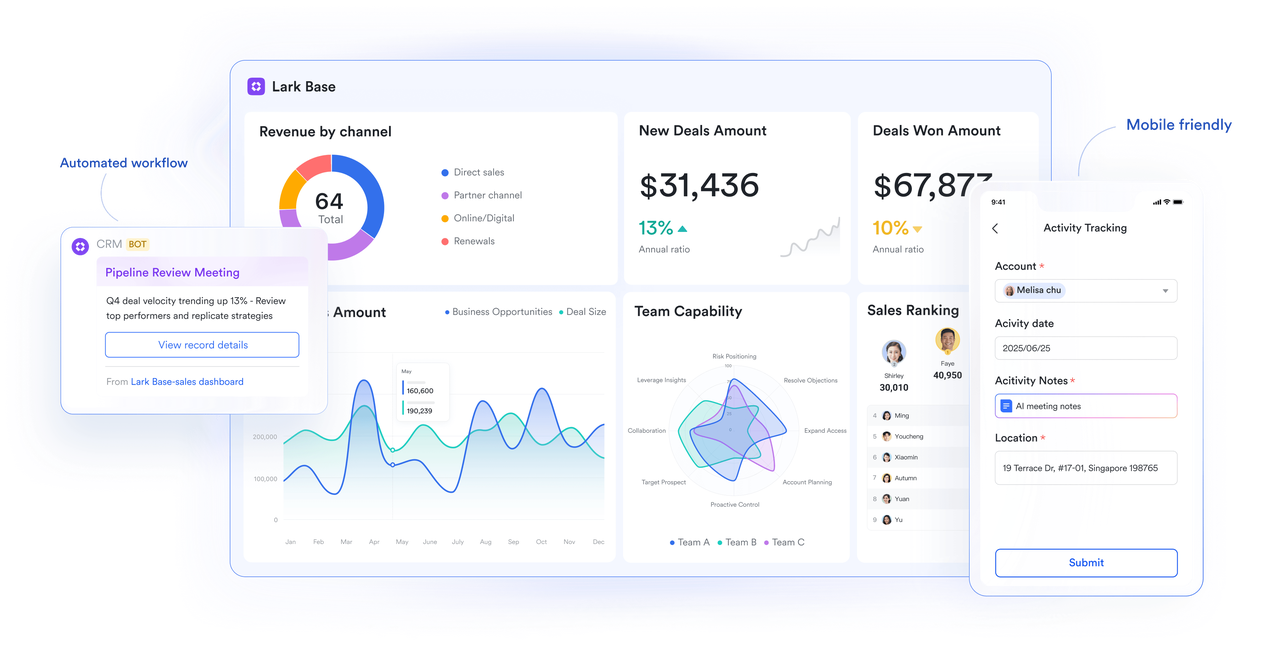
Base operates the abilities of a CRM app, which lets sales and marketing keep track of customer pipelines, keep records of interactions with clients, and work together even if they are in different time zones. Creative teams also benefit because they can keep all of their client approvals, marketing briefs, and design materials in one place. Base combines a lot of various types of records into one system. This keeps insights linked and stops duplicates.
Dashboards show progress in real time, and linked records connect projects that are similar to each other to give them more meaning. Kanban, grid, calendar, or Gantt views enable teams to see the same information in the way that works best for them. Base gathers information and puts it into flexible structures that help teams focus on creative work instead of handling paperwork.
Lark Docs: Making collaboration transparent and continuous
People often work together to come up with ideas, yet they don’t always come out completely formed. But issues with email attachments and differing file versions can slow this process down. Lark Docs takes care of these problems by making an office that changes every time someone contributes something new.
Creative teams can all work on the same version of ideas, strategy decks, or screenplays at the same time to ensure sure everyone is on the same page. Inline comments help you comprehend what you’re reading, and version history keeps track of all the changes that have been made. Adding stuff like Sheets or photos to your work provides you more information and keeps your creative juices flowing.
Teams don’t have to spend hours merging modifications; they can see their ideas come to life right in front of them. Docs maintains papers open, active, and collaborative, so creative work is continually changing and never stops.
Lark Messenger: Turning conversation into creative momentum
People can think beyond the box when they talk, but if things aren’t going well, it might be more of a distraction than a motivator. Lark Messenger makes sure that your conversations are useful, organized, and focused on getting things done.
Pinned messages help people remember crucial decisions, and threaded discussions can help some projects stay on track with their brainstorming. By making sure that the correct individuals are talking at the right moment, mentions help keep ideas going. You can talk to people and get stuff done at the same time with Messenger. That’s the nicest part. With just one click, you may turn an idea you talked about into a Task or Doc.
Messenger makes sure that talking about ideas leads to action without losing their meaning. This helps teams turn random thoughts into concrete results.
Lark Calendar: Coordinating creative energy
Deadlines are hard yet vital when you’re undertaking creative work. When there is too much stress, new thoughts don’t come to mind. Things take longer when there isn’t adequate organization. Lark Calendar accomplishes this balance by keeping teams on track and up to date without making them too busy.
Everyone in the firm can see on shared calendars when project deadlines, assessments, and client presentations are due. Automatic time zone conversion makes sure that creative teams all over the world are on the same page, and reminders make sure that no critical dates are missed. You can connect events directly to Docs or Base data, so you’ll always know what the meeting is about.
Calendar helps keep things organized, which keeps creativity from getting lost in the chaos. This makes it easier for creativity to flow toward delivery.
Lark Approval: Protecting creativity with clarity
People often can’t be innovative because they have to get permission. If you have to wait weeks for a customer to sign off or for your own budget to be authorized, it could take longer for you to get things done and come up with new ideas. Lark Approval fixes this by making decisions faster and more consistently while still holding people accountable.
Employees fill out standard forms to make requests, and supervisors may see on the interface which requests are still open. Logs keep track of every choice, and permissions based on responsibilities keep sensitive information safe.
The best part about approval is that it has an automated workflow that sends requests to the correct individuals right immediately. Notifications and reminders help people keep track of things, so approvals don’t stop people from being creative. Instead, they preserve creativity with safe, regular regulations.
Lark Wiki: Preserving inspiration for the future
Having creative ideas can help you accomplish well in your current work and your next one. A lot of firms lose important information because it stays in people’s brains or gets lost in old files. This is really bad. Lark Wiki stops this from happening by collecting and organizing helpful information for the group.
On Wiki, you may quickly find regulations, design guidelines, marketing playbooks, and archives of brainstorming sessions. The company changes a lot, and permissions keep confidential information protected. Employees can easily locate what they need because they can search for many things. This turns lessons from the past into plans for the future.
Wiki makes it easier to find and organize information, so people don’t have to come up with new ideas every time.
Conclusion
Fresh ideas don’t just come out of nowhere. It happens when teams can easily get to, share, and build on what they already know. When tools are split up, it takes longer to get things done, sharing ideas is tougher, and working together is difficult. Unified platforms like Lark solve this by making the creative process more clear, organized, and accountable.
Base organizes information like a CRM; Docs help people work together; Messenger turns talk into action; Calendar keeps the energy going; Approval keeps alternatives coming with automated processes; and Wiki keeps ideas alive for the future. All of these elements work together to make a digital place where you can store information and come up with fresh ideas.
It’s evident what CEOs need to know: fresh ideas can grow when things are clear. Companies utilize linked technology for more than just keeping track of work; they also use it to make huge changes happen.